Really, Shakespeare? Really?
Sonett 129: Th’ expense of Spirit in a Waste of Shame
Th’ expense of Spirit in a Waste of Shame
Is lust in action; and till action, lust
Is perjured, murd’rous, bloody, full of blame,
Savage, extreme, rude, cruel, not to trust,
Enjoyed no sooner, but despised straight,
Past reason hunted; but no sooner had
Past reason hated as a swallowed bait
On purpose made to make the taker mad;
Mad in pursuit and in possession so,
Had, having, and in quest to have, extreme;
In bliss in proof and proved, a very woe;
Before a joyous purpose; behind, a dream.
All this world knows; yet none knows well
To shun the heaven that leads men to this hell.
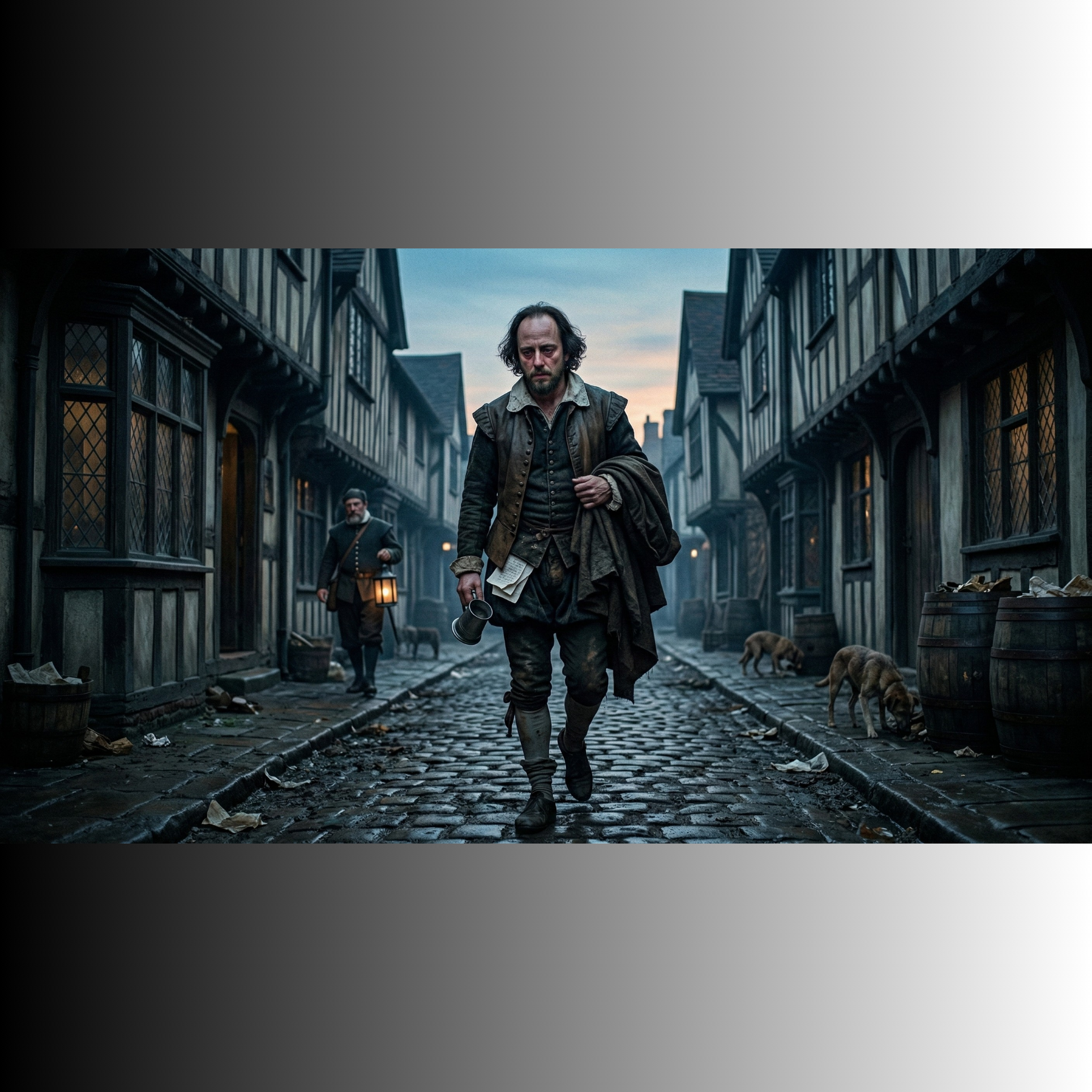
(WouldIwas Shookethspeare on his early morning walk of shame.)
It’s February and by the time our beloved readers come upon this article, Valentine’s Day will have come and gone. While many may have chosen such classics as “Pride and Prejudice” by Jane Austin, “A Midsummer Night’s Dream” by William Shakespeare, or “Cyrano De Bergerac” by Edmond Rostand for those whose hearts sing louder than their voices, I have chosen a different route. When broken down, we see our friend The Bard is essentially writing about what we today refer to as “The Walk of Shame”. Who among us hasn’t experienced this moment? When we look around us in the morning, with the light of a new day, and think “Really, past self? Really?” Why would I choose such a silly sonnet and what on Earth could it possibly have to do with you, our fellow writers?
While written in a romantic early modern English, with particularly intelligent word choice and iambic pentameter, our friend The Bard is not attempting to woo anyone. Nor is he speaking of a philosophical matter we should reflect on for the afternoon. He’s speaking of a matter which most of us, in some way, have experienced with blinding truth. Perhaps not romantically. Perhaps it was a pint of ice cream, a second bottle of wine, or a 2 am Taco Bell run. Whatever the case, we all know that moment. When we must face our past decision with glaring consequences. Which is exactly the point, even the most iconic of writers had examples of writing that exposed the truth of the matter: we’re all human.
We often think of great writers with an air of elevation that can be unrealistic. A raised expectation that they might have walked differently, thought differently, and lived differently. This could be the result of a few matters combined.
Firstly, language changes. While we now regard classic literature as innately genius in its structure, we should also remember styles of writing flow and adapt. We move from Neoclassic English, to Romantic English, to Victorian English, to Early Modern English, and so on. Part of what we regard as a masterpiece is an appreciation of historical wonder. That on its own is a wonderful thing, paying homage to those who came before us. Humbling ourselves to the past. While doing this, though, perhaps remember that most writings were written with these same standards. Our remembered authors were focussing on the same details present authors attempt to keep in mind. Our word choices, our structure, and our authenticity.
Another reason our heroes are cemented upon their pedestals,is that they’ve already passed. There’s no room for more disappointment. The common phrase “never meet your heroes” is said with the thought that as soon as we do so, we’re opening ourselves up to reality in understanding that those we love may have atrocious parts of themselves they hide away. With our classic literary heroes gone for some time now, they are protected from saying something galling on Facebook and having it spiral out of control all over the online communities! They’ve cemented who they are in timeless pages of history.
Do these things take away from their brilliant works? Never. They are always going to have wonderful works we return to with loving nostalgia and appreciation. The Bard will always be the creator of fantastical swordfights, and romantic scenes of graceful love. However, he too was only a man. A man who experienced walks of shame, graceless falls, and most likely evenings with one too many a drink and actions of foolishness. Demystifying great authors doesn’t diminish what they have accomplished. It reminds us that we, too, can create great works. With time, determination, and the honest critiques of our fellow writers we grow, like beanstalks, shooting upwards to new heights.
Well, that just about wraps things up for now. Until next time, friends, remember to keep looking for that silver lining throughout your day.

-Patricia L. Hartman,
EIC Midnight Garden Publishing
CEO / Founder Silver Lining Lotus Editorial