The Resurgence Through Rays

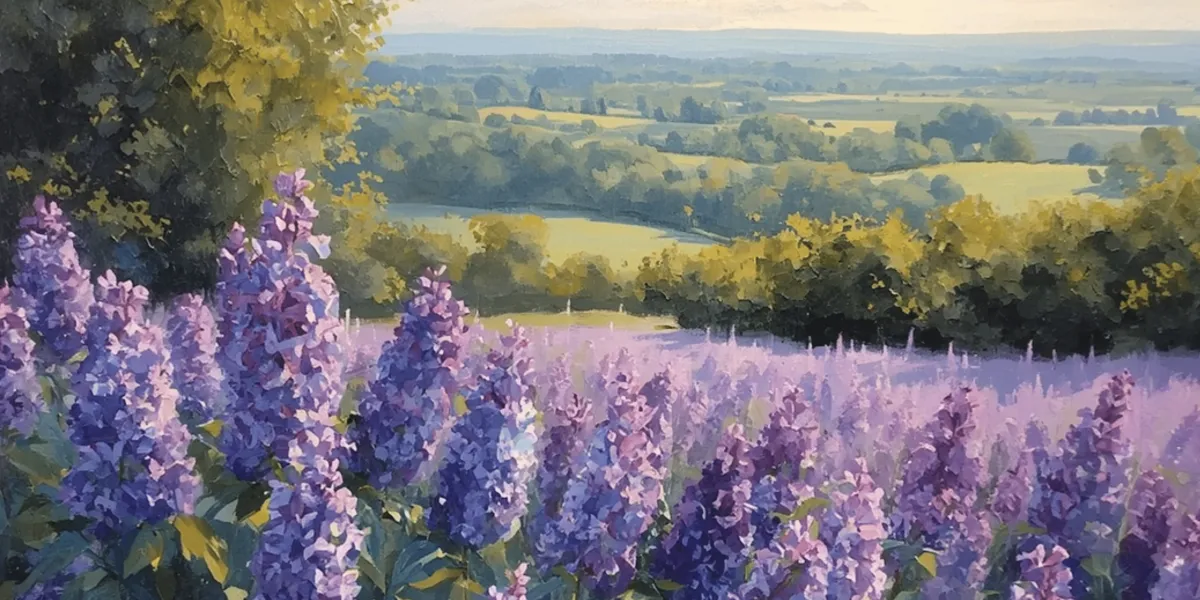
O, Were My Love Yon Lilac Fair
by Robert Burns
O, were my love yon lilac fair
Wi’ purple blossoms to the spring,
And I a bird to shelter there,
When wearied on my little wing.
How I wad mourn when it was torn
By Autumn wild and Winter rude!
But I wad sing on wanton wing
When youthfu’ May its bloom renew’d.
The Land Sings by M. Palowski Moore, SLP
I am listening
To the land
The soft chorus
The rhythmic cries
Masterful melodies
Of ancestral winds.
These sacred songs
Are poetry for my soul
Light for dreaming
Peace for perspective
Breath beyond the borders.
Last month Dr. Gulley was spotlit within our newsletter showcasing her loveable whimsy and wild wit! This month we invite another local author to join the fun as we bring to the forefront unseen authors in Kansas City. Mr. Palowski Moore is the chancellor of The Sunflower Poetry Society, a Kansas chapter of a much larger national federation of poetry.
The mission of this chapter is an inspired one: To make poetry and artistic expression accessible to all. All are welcome and poetry education can be an amazing salve for the wounds of a troubled world. While speaking with The Chancellor earlier this month, I saw this mission was not only within the society he represents, but something he personally felt down to his core. No one should be turned away, no one should feel they don’t belong. We, as a collective, should try to understand the ever changing representations of poetry, writing in other genres, and all artistic manifestation. Mr. Palowski’s vision to educate and grow with our fellow writers is simply contagious and his glowing personality shines warmly to those around him.
The pages of April’s article also present an example of classically structured poetry. Robert Burns, who was widely regarded as the national poet of Scotland during his life in the late 1700’s. He wrote many poems, as well as folk songs, which used nature as a mirror, highlighting the emotions and interactions people experience. What do both Mr. Pelowskis and Robert Burns have in common? What draws them together besides poetry itself? Though they seemingly have such differing approaches, there is a commonality that we all should be mindful of when writing and during the editing process.
Both of the pieces shown above are admiring nature, which I find quite fitting this month as we open wide our arms and welcome spring back once again. After a long winter such as ours, often occurring in Kansas City, the passing season seems to feel exhausting as though it’s clawing to hang on as long as possible. The rejuvenating breath of warm sunshine kisses our faces and we feel our energy increase with the spike of vitamin D and bird’s singing.
However, that would seem to be about all we could say these men have in common in their writing. They both speak of nature, the commonality ends there. Robert Burns' structure and rhyme scheme is carefully thought out, including the classic Scottish dialect, and implementing them in a way that works with the natural flow.
The Chancellor, a more modern poet, writes freely without rhyme scheme, utilizing punctuation and line placement to collect thought and graceful flow. While still maintaining a thoughtful sense of dance, waxing and waning to its completion.
Which is really the crux of the lesson I bring to light today. Intentionality in word choice and design. While our poems may begin as ways to process emotions, capture inspiration, understand ourselves, or attempt to give voice to others we must do more than merely capture the moment. Poetry can do all of these things with beauty and a creative lens that communicates in a unique and powerful way. But we must keep in mind that to elevate our moment, to make it the best it can be, intentionality is key. Intentional word choice can make or break your piece. It’s the difference between “A fun party” and “A truly joyful experience with loved ones and excitement.”
It’s equally important to be open to criticism about our intentionality. As an editor, the role I play is to bring an unbiased outside perspective to the manuscript and to use that position to widen a pool of possibilities. To create a more expansive piece. This can only be accomplished with shared understanding that criticism is not judgement and change is not correction. A humble approach and an open mind to new ideas while revisiting pieces to promote focused intentional wording and design is the mark of artistic crafting, and reflects wildly within a finished product. Poetry is expansive and should be accessible to all no matter class or training. With open minds, accepting hearts, and welcoming arms we can each share beautiful works of art to a world in desperate need of light in dark shadows.
Well, that’ll just about wrap things up here for the month. I hope you all enjoy your internal sunshine, as well as the warm rays starting to poke out around us this season. Have a wonderful April and, as always, keep looking for that silver lining.

Patricia L. Hartman, CEO of Silver Lining Lotus Editorial
EIC of Midnight Garden Publishing