Kansas City's City Market: History, Heart, and a Great Place to Eat
I'll be honest — the City Market wasn't somewhere I explored much as a younger person. I was just getting behind the wheel of my own car when things were taking a downturn in the area during the '70s. Some mob activity was going on, and I was given strict instructions: don't go there. Ever. I simply didn't. It was also pretty well shut down after a bombing in 1977. Since I wasn't much of a news follower in my teens, it wasn't until I started researching the City Market as a tour guide that I truly discovered its stories. Now I completely understand why I was told to stay away — and I was absolutely thrilled to see the renewal that began in the 1980s and has continued right up to today.
How It All Began: The 1830s–1840s
In 1834, John McCoy — a businessman and real-estate speculator — platted the town of Westport. His goal was to draw travelers to this landing instead of the rapidly growing rival town of Independence. By 1838, McCoy and a group of men had purchased a farm that encompassed the entire river market area. Complications of land ownership dragged on until 1846, when they finally platted the area and called it the "Town of Kansas," naming it after the Kansas Indians who lived to the west.
The location was perfect. Just a stone's throw from the confluence of the Missouri and Kansas Rivers, it became the center of a brisk trade — a place where farmers, settlers, westward-bound emigrants, and riverboat crews bargained over foodstuffs, wood, textiles, tools, and other goods. It was also prime outfitter territory for wagon trains heading west on the Oregon and California Trails, which soon welcomed the "Forty-Niners" rushing to Sacramento during the Gold Rush.
Growing Pains: The Civil War Era
The trials of the Civil War — including William Quantrill's raid on Lawrence, Kansas, and the forced displacement caused by General Order No. 11 — temporarily brought Kansas City's growth to a standstill. But that pause wouldn't last long.
The Railroad Boom: 1869 and Beyond
The completion of the Hannibal Bridge in 1869, connecting the Missouri River to rail lines, absolutely exploded the city's growth. Within just a few years, Kansas City hosted 13 railroad companies and saw its population surge to 200,000. The Union Depot in the West Bottoms quickly became a hub for cattle processing and winter wheat milling.
The cattle industry grew rapidly alongside a key technological innovation — refrigerated rail cars:
1867–1870: Texas cattle began arriving via the Chisholm Trail to Kansas rail-heads, just as the Hannibal Bridge opened.
1871: The Kansas City Stockyards officially launched in the West Bottoms.
1875: The first successful refrigerated rail cars were developed.
1880s: Meatpacking giants like Armour built packing plants, using refrigerated cars to ship processed meat east rather than shipping live cattle. The city's population more than doubled.
1883: Armour established the Armour Refrigerator Line.
1890s: Refrigerated meat shipping became big business.
Getting Around: The Streetcar Story
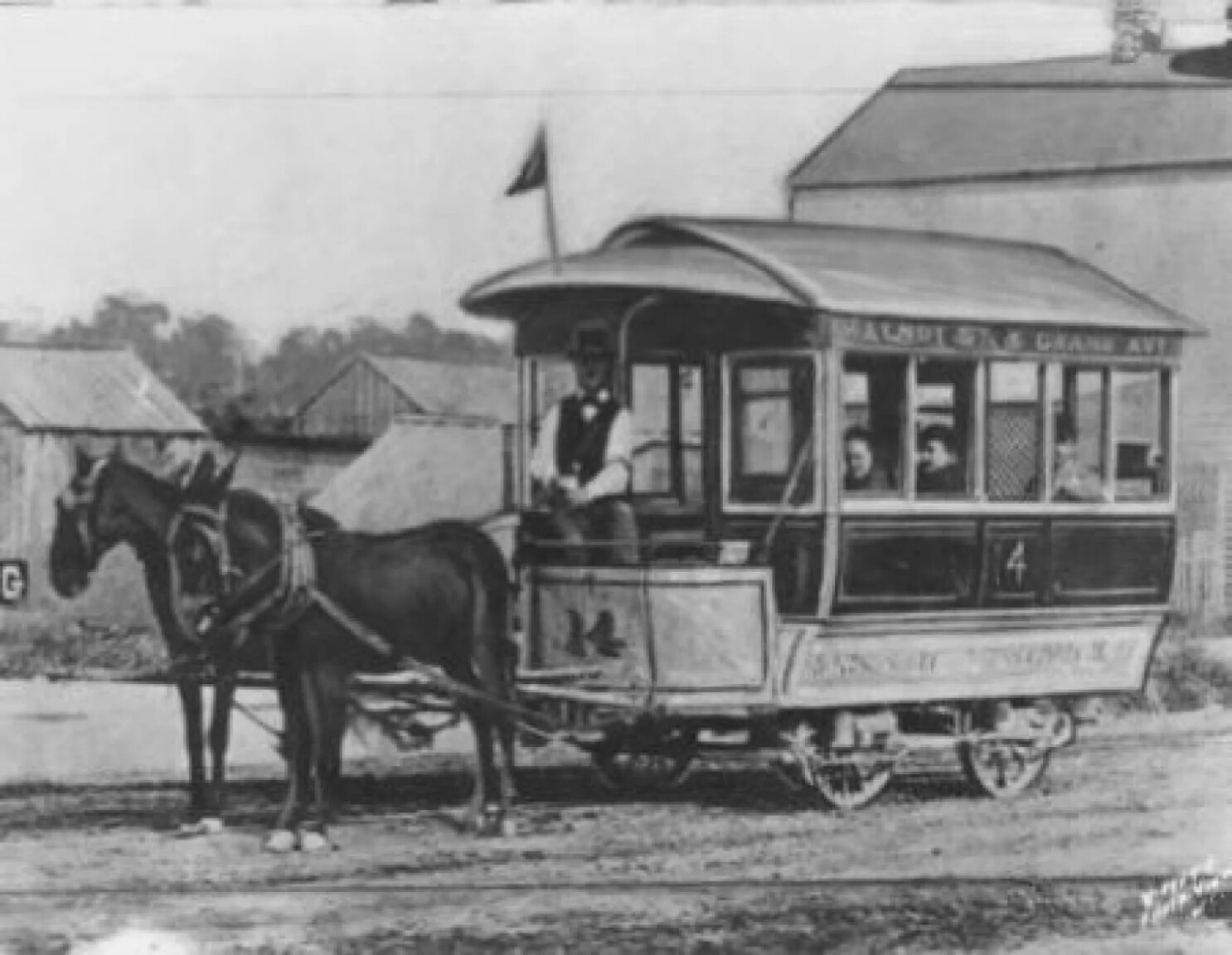
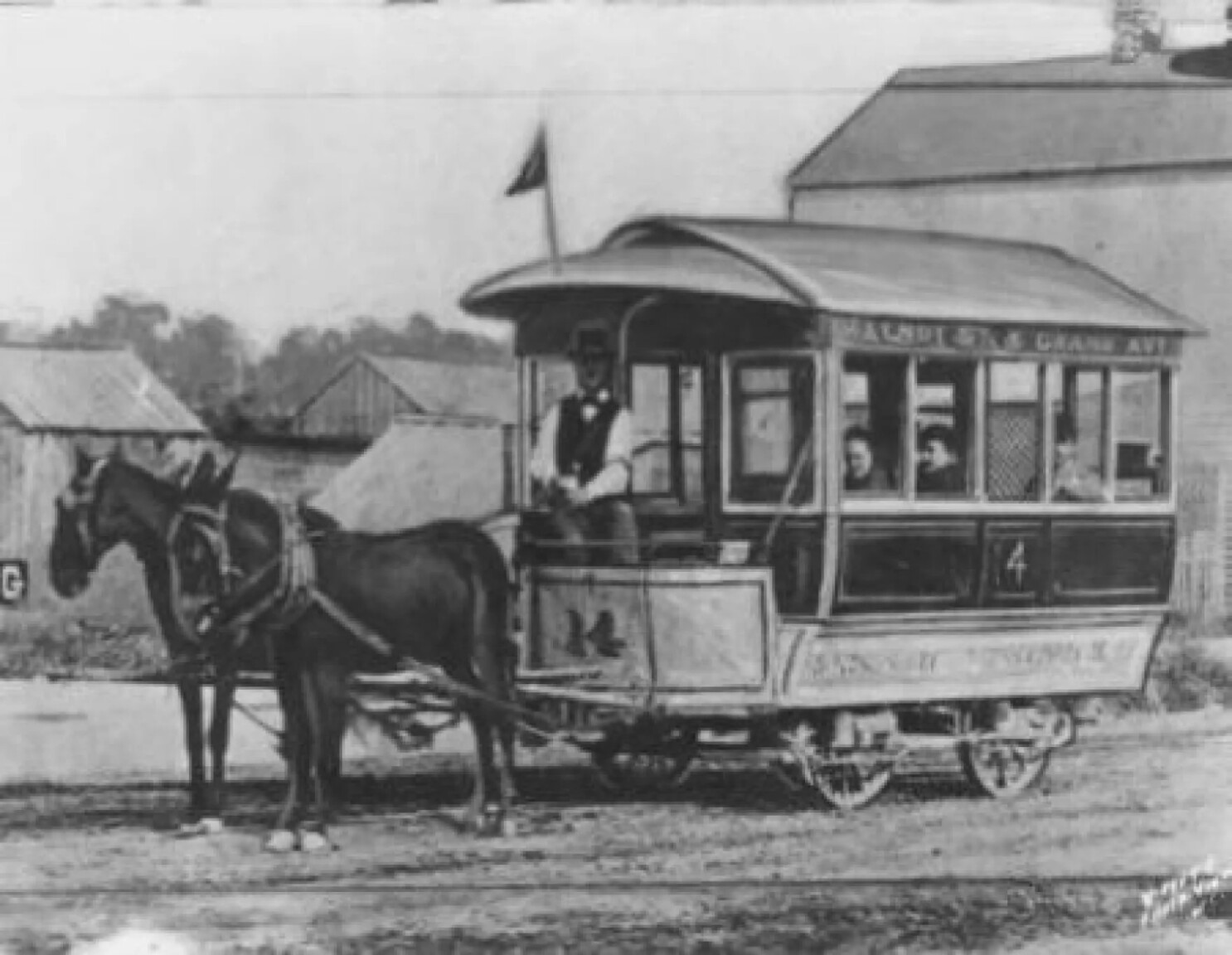
The City Market area was also central to one of North America's largest 19th-century transit systems. It started with mule-drawn cars in 1869 — horses first, then mules, which were better suited to the city's hills. They earned the charming nickname "hayburners." The cars offered little comfort and frequently derailed, but they gave Kansas Citians their first dependable way to get from one part of town to another.
By 1880, cable cars had arrived, followed by electric streetcars by 1900. The system included some clever engineering to handle the local terrain — including the 8th Street Tunnel (1888) and the 9th Street Incline, which connected the West Bottoms industrial district to the higher-ground business district. By 1908, most lines were electrified, and ridership peaked in the 1920s.
The last electric streetcar ran in 1957, replaced by buses and automobiles. But the story came full circle in 2016, when the modern, free KC Streetcar restored service to the area.
Vice, Commerce, and Annie Chambers
In 1888, Kansas City constructed an elegant brick market building with 56 stalls along Walnut Street near 5th. Horse-drawn produce wagons delivering local farm crops to housewives remained a daily presence at the City Market well into the 1920s — even as the rest of the city modernized around them.
The blocks surrounding the City Market were also the center of Kansas City's booming vice trade. Much of this illegal activity took place along a stretch of Main Street often called "Battle Row" — which, rather ironically, was just across the street from City Hall and police headquarters. Gambling and prostitution violated Missouri law, of course, but the entrepreneurs engaged in these businesses were let off with meager monthly fines. It's said there were 40 gambling dens and an equal number of bawdy houses within walking distance of the City Market.
The most lavish and enduring of these establishments was opened in 1872 (operating for about 51 years) by Annie Chambers. When you read further into her story, it becomes surprisingly nuanced. She believed she was helping women better themselves. Her employees were required to dress properly in public and were not allowed to swear. They earned far more than other women in similar situations, and Annie taught them how to manage their money — with the goal of finding a respectable path forward in life.
Near the end of her career, she met a pastor and his wife, found faith, and spoke out against prostitution. She donated her building to the preacher, and it became a home for wayward men — a direct precursor to the City Union Mission, which still serves Kansas City's homeless community today. Quite a legacy.
Modernization and the Ten-Year Plan: 1920s–1930s
As the city grew, the City Market shifted more toward wholesale product distribution. Local grocery stores in the suburbs, improved highways, and refrigerated trucking drove vast expansion.
Notable businesses of the era included U.S. Cold Storage, which built the largest refrigeration facility in Kansas City devoted primarily to produce; Chase Bag Company, which manufactured the burlap bags essential to the produce market; and Merchants Bank, the last bank building to be built in the City Market area.
Two iconic local businesses also got their start during this time. The Pisciotta family built a wholesale fruit and vegetable company, with trucks bearing a memorable logo that rolled through the city until the year 2000. The second was Henry Wertheim , who opened Planter's Seed Store, originally serving local farmers — and still operating today. If you love feeding the birds like I do, their seed truly brings all the birds to your yard.
The Ten-Year Plan of 1931 provided $500,000 for improvements to the City Market. City bond money served as seed capital, encouraging additional investment from the federal Works Progress Administration (WPA), private investors, and railroad companies — which spent at least a million dollars building a modern perishable foods terminal. Everything in the old City Market area was cleared out, including the old city hall, police station, and fire station. Architect Fred Gunn applied a moderate Art Deco design to a new collection of utilitarian buildings. A small retail market faced south along 5th Street, while three open-air "pavilions" for farm products were laid out in the middle of the square — the same layout you see today. Since people were now driving to the City Market rather than taking streetcars, a large parking lot was also set aside west of Main Street.
The Ten-Year Plan was managed by City Manager Henry McElroy, a Tom Pendergast ally — and Pendergast's influence helped pave the way for both the City Market improvements and the construction of Municipal Auditorium with WPA assistance.
The Turbulent '70s
Moving into the 1970s, mob activity made a resurgence, with disputes over property, parking lots, and turf escalating into violence. On March 27, 1977, a bomb exploded at 4th and Wyandotte, destroying two bars — Pat O'Brien's and Judge Roy Bean's. While no one was killed, it marked the beginning of a violent street war that devastated the area's reputation and essentially shut the market down.
Renewal: The 1980s and Beyond
By 1978, the City Market had been placed on the National Register of Historic Places, bringing tax incentives for developers. One meaningful new rule: bars could no longer operate unless they were part of a restaurant. Small businesses began moving back in, and the neighborhood slowly came back to life.
Then in 1991, the Steamboat Arabia Museum joined the mix, drawing as many as 2,000 visitors a week to see its remarkable artifacts. A heads-up for those planning a visit: at the time of this writing, the Steamboat Arabia will be closing its current location after September 2026 and moving to a new home. They have exciting plans to excavate more steamboats, which I think is wonderful news. I'll follow them wherever they go — and I'd encourage you to visit before they close, even if you've already been. It's always worth a second look.
The City Market Today
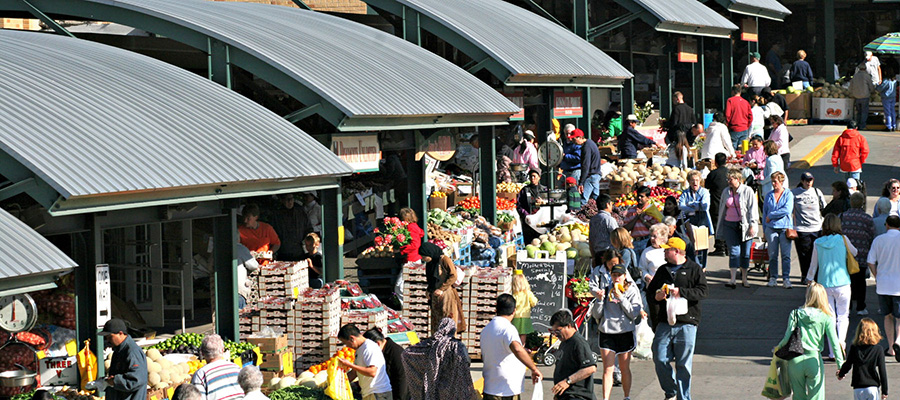
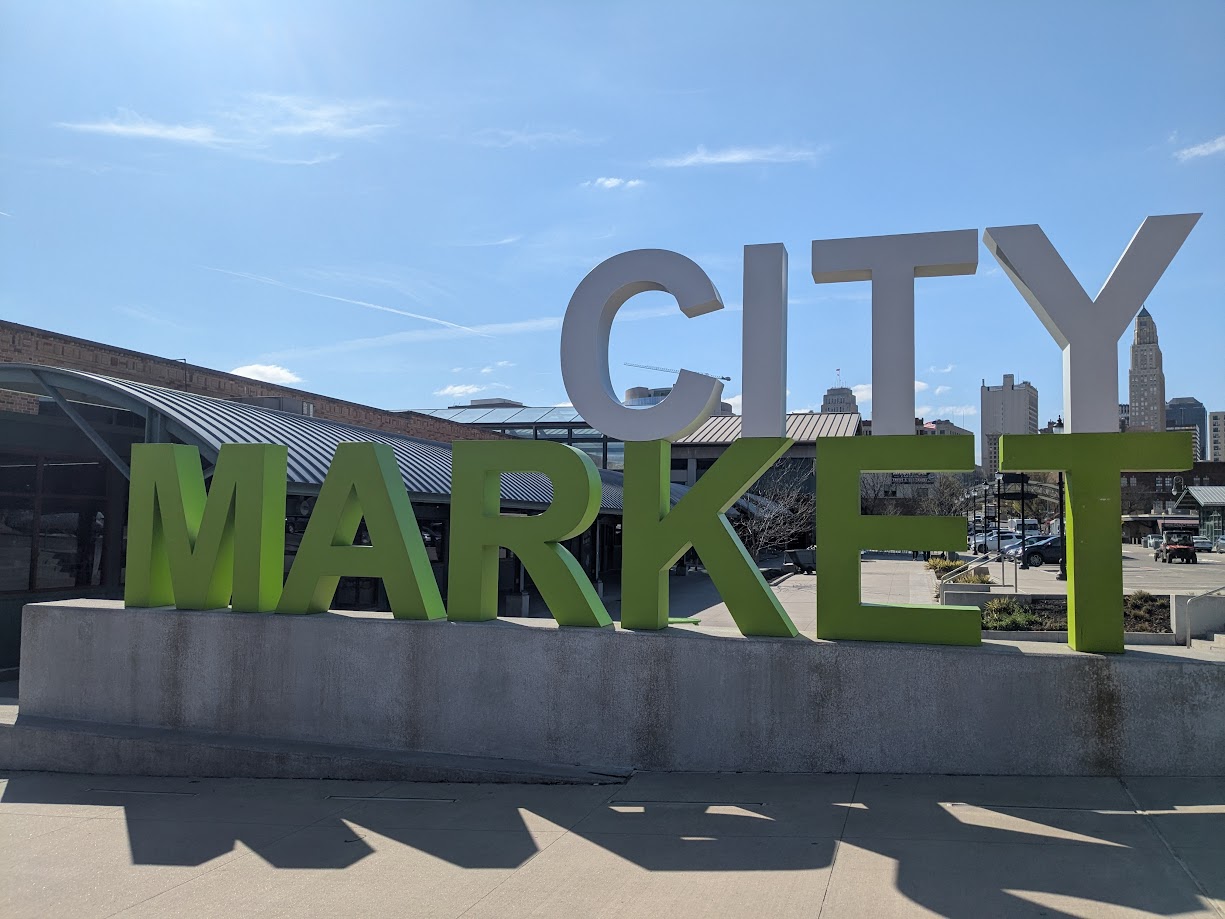
The City Market has blossomed into a vibrant destination with a wonderful variety of dining options. From casual, family-owned spots to more upscale restaurants like Brown & Loe, the ethnic diversity alone is worth the trip — think Blue Nile for Ethiopian cuisine or a Brazilian churrascaria for something heartier. You will not be disappointed.
Weekends bring the full farmers market experience, with Saturdays and Sundays featuring two completely different sets of vendors, along with fresh produce, boba tea, ice cream, and more.
I often lead the Kansas City Experience Streetcar Tour from Union Station to the City Market, ending there so guests can explore and grab lunch on their own. It makes for a full day of fun, great food, and history that connects the past to the present. Groups of six or more can book this as a private tour.
I also have a City Market History and foodie tour that is a fan favorite — we eat our way right through the City Market. Come hungry!
https://justonedaytraveltours.com/
https://www.tiktok.com/@justonedaytraveltours
https://www.instagram.com/justonedaytours/