A Mother's Method
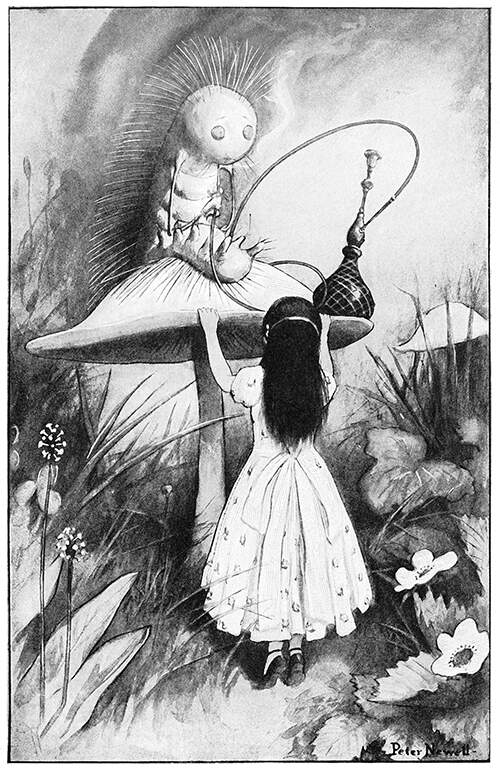
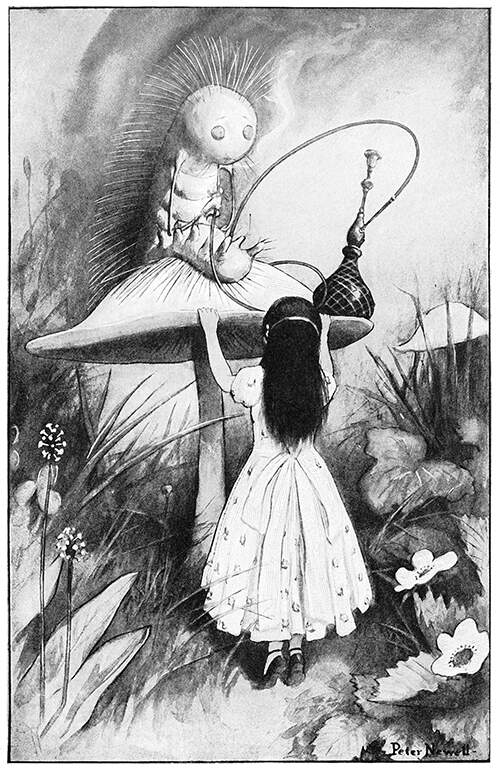
“The Caterpillar was the first to speak.
“What size do you want to be?” it asked.
“Oh, I’m not particular as to size,” Alice hastily replied; “only one doesn’t like changing so often, you know.”
“I don’t know,” said the Caterpillar.
Alice said nothing: she had never been so much contradicted in her life before, and she felt that she was losing her temper.
“Are you content now?” said the Caterpillar.
“Well, I should like to be a little larger, sir, if you wouldn’t mind,” said Alice: “Three inches is such a wretched height to be.”
“It is a very good height indeed!” said the Caterpillar angrily, rearing itself upright as it spoke (it was exactly three inches high).
“But I’m not used to it!” pleaded poor Alice in a piteous tone.”-Lewis Carroll, Alice's Adventures in Wonderland
May is just around the corner and while we’re settling our senses into Spring, our mothers are wide eyed for a variety of reasons. Mother’s Day rejoicing? Certainly. Along with the two subtle words that predict a mix of fun, chaos, and the unknown: Summer Break. School is out and the pool is open. Time for sunblock and your favorite water tumbler. But why would we mention all of this in an editorial article? Why would we mention Lewis Carroll? Is this editor just wanting to remind everyone to call their moms and make them feel loved? Though that is certainly good advice, I have a little more up my sleeve. Or in my pocket rather. Because, let’s face it, it’s too warm for sleeves by this point.
Whether writing a whimsical work of wonder like Lewis Carroll, or adjusting a message each year to mature with their children like mothers must, an author holds in their hands the responsibility of knowing their audience. While there is truth that we are sharing our own life’s stories and experiences, we should also remember that we write for those with whom we intend to relate. With this in mind we must consider that one never truly writes for themselves. It’s important to bear this in mind as we write. We create a narrative and that narrative is how we’re seen when our audience absorbs our work.
While that might seem a little obvious, let me elaborate a bit. If a person is writing a piece to young children several things must be kept in mind as they work: the age group of the children, the lesson involved in the writing (or if there should be one at all), what are children taking away from language in between plot movements. So many details integrated to create a narrative that reflects the characters, the author, and what points are attempting to be made.
Lewis Carroll, in writing Alice’s Adventures in Wonderland, makes a point of using fun situations that engage the child’s mind. While doing so he tells a fictional story, with a true center. He ensures it is thought provoking while still being appropriate, without scaring the children reading it. He evokes real empathy for other’s situations, but doesn’t shame readers into believing they need to feel guilt for what’s happening. He ends the story on a call to action. Something even small children are capable of doing. Giving them control and showing even small actions coupled with responsibility make change. Without keeping these moves in mind as he wrote, Carroll could have easily confused or hurt the small children taking in all of this information.
Mothers make specific decisions as children grow, in the types of conversations necessary. How much information to give. How much is useful? How much ambiguity is necessary in order to be effective? As writers, we must move in a similar direction. In an adult conversation we can paint with a vibrant brush of detail and emotion and vernacular while knowing that not only is it acceptable, it’s necessary. Assuring the reader stays engaged and curious about what is coming. We must reduce repetition in vernacular, finding similes, using complex and open ended ideas that could create conversation for hours. Whereas writing for young adults we strive to be curious, ask hard questions about how we’re feeling and how multiple emotions exist at the same time even conflicting with each other! So many details to keep in mind. But if we persist, at the end we find a beautiful canvas of ideas that our intended audience will welcome with open arms, curious hearts, and wide eyed wonder.
With this in mind this editor would suggest creating intentionality before construction. Consider age groups, purpose, genre, and accessibility. By doing so we can be more provocative and complex in our creations.
That’s about it from your local editor this month, I hope you’ve enjoyed your tour around the editorial trellis. Until next time, keep looking for that silver lining!
Patricia L. Hartman, CEO / Founder
Silver Lining Lotus Editorial
EIC Midnight Garden Publishing